Fume Hood
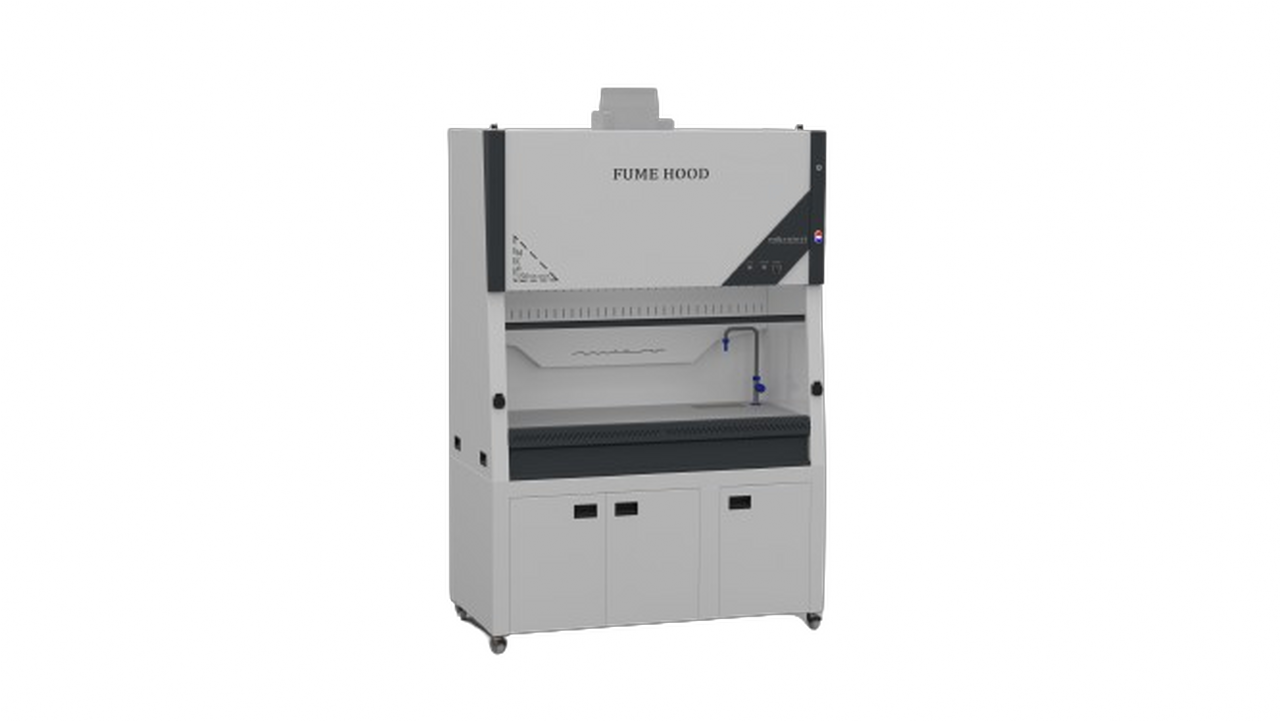
The laboratory chemical fume hood is the most common local exhaust ventilation system used in laboratories.
When used properly, fume hoods offer a significant degree of protection for the user.
The purpose of a chemical fume hood is to prevent the release of hazardous substances into the general laboratory space by controlling and then exhausting hazardous and/or odorous chemicals.
The exhaust fan is typically stationed at the top and pulls air through the duct work connected to the hood and exhausts it into the atmosphere.
In the event of an accidental spill, the fume hood will contain the spilled chemicals and exhaust the fumes away from the user and laboratory zone.
TECHNICAL SPECİFİCATİONS
|
Model |
MCO-90 |
MCO-120 |
MCO-150 |
MCO-180 |
|
İnternal Dimensions (WxDxH) mm |
836x568x941 |
1136x568x944 |
1436x568x944 |
1736x568x944 |
|
External Dimensions (WxDxH) mm |
900x750x2210 |
1200x750x2210 |
1500x750x2210 |
1800x750x2210 |
|
Transport Stand Dimensions (WxDxH) mm |
900x750x933 |
1200x750x933 |
1500x750x933 |
1800x750x933 |
|
Fan motor (m³/hour) |
1080 |
1080 |
1250 |
1450 |
|
Fan motor |
Corrosion and acid resistant centrifugal fan |
|||
|
Work Surface |
A special compact panel with thinkess 16 mm - high resistance to many aggressive chemicals, Stainless steel, Ceramic, PP (Polipropilen) |
|||
|
Lighting |
Vapor proof fluorescent lamp (800 LUX) |
|||
|
Noise Level |
The sound/noise level should be less than 55-60 db |
|||
|
Electrical Fittings |
Electrical outlets with splash proof cover - 2 x 10 A 220 V |
|||
|
Front Sash/Glass |
Tempered safety glass (at least 6 mm thick), electric motor controls |
|||
|
Control Panel |
Mechanical control or LCD screen |
|||
|
Downside Cabinet |
Ventilated base cabinet for storage reagents |
|||